Turning New Hires Into High-Performing Assets
How probation data improves hiring

The offer letter is signed. The onboarding paperwork is complete. The new hire shows up on Monday morning.
For most organizations, this is where the hiring process ends. The ATS moves the candidate to "Hired" status. The recruiter closes the requisition. The hiring manager moves on to the next open role. And the new employee enters a 90-day probation period that is managed entirely by instinct, intuition, and the occasional check-in meeting.
This is a critical strategic mistake. And it costs organizations far more than they realize.
The Probation Blind Spot
The 90-day probation period is the most information-rich phase in the entire employee lifecycle. A new hire is actively learning, adapting, demonstrating capability, and revealing gaps. The signals that emerge in these three months are more predictive of long-term performance than anything captured in the interview process.
And almost none of it is systematically captured.
Organizations that invest heavily in sourcing, screening, interviewing and then do nothing to measure performance in the first 90 days, are doing the equivalent of designing a sophisticated experiment and then forgetting to record the results.
The hiring process does not end at offer acceptance. It ends when the organization can confirm that the hire is performing at the level the hiring process predicted.
For most enterprises, that confirmation never comes in a systematic form. Which means the hiring process has no feedback loop. And a process without a feedback loop cannot improve.
What Phase 3 Actually Requires
Converting a new hire into a high-performing asset requires three capabilities that traditional HR systems do not provide:
Structured Performance Signal Capture
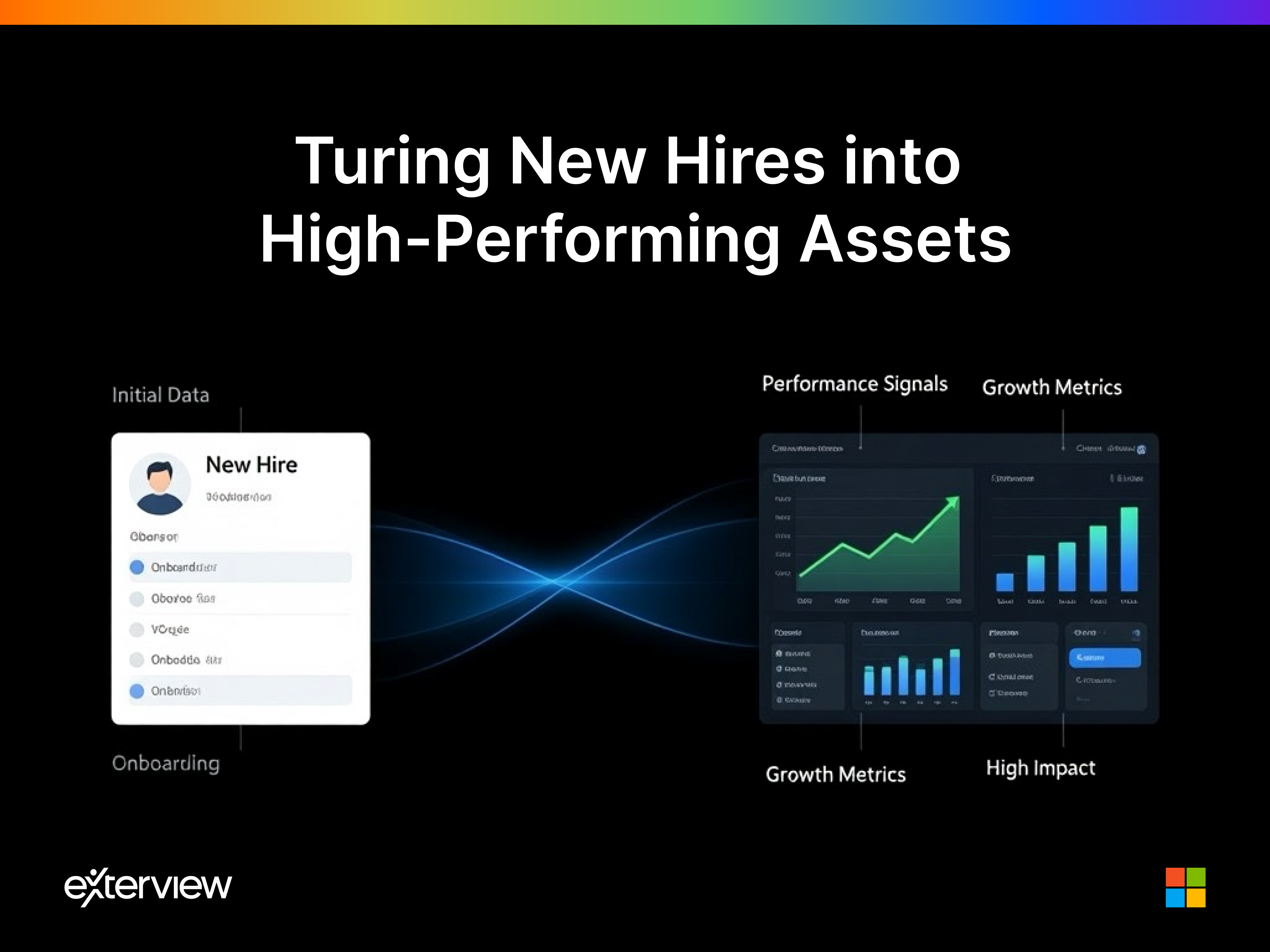
The probation period generates rich performance data, task completion rates, manager feedback, peer assessments, project contributions, skill demonstration events. This data needs to be captured in structured, comparable form not as informal impressions but as systematic evaluation against the competency framework that governed the original hiring decision.
Gap-to-Development Mapping
Every new hire arrives with strengths and gaps. Phase 3 intelligence should surface those gaps early not at the 90-day review when it may be too late to intervene. But within the first 30 days when the organization still has time to provide targeted development support.
Hire Quality Validation
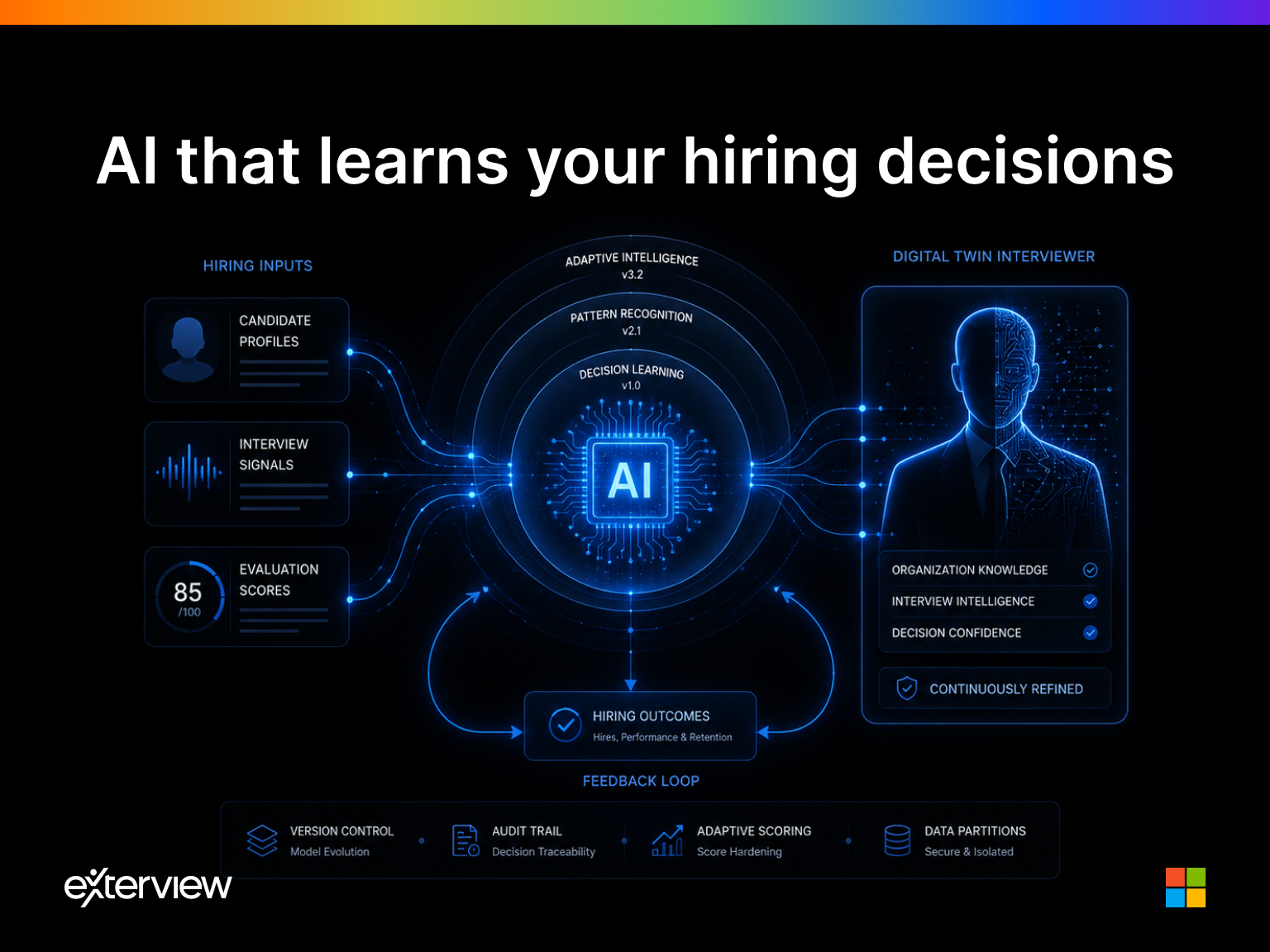
Phase 3 closes the loop that the rest of the hiring process opened. When 90-day performance data is compared against the capability scores that predicted it, the organization learns something invaluable: which evaluation signals were accurate, which were noisy, and which were systematically misleading.
This is how hiring processes get better. Not by changing interview formats based on intuition. By analyzing the correlation between what the evaluation predicted and what reality delivered.
Exterview's Probation Intelligence Framework
Exterview extends the intelligence layer beyond the hiring decision into the first 90 days of employment. This is not a separate HR performance management system. It is a continuation of the same evaluation framework that governed every stage of the candidate journey.
30-60-90 Day Structured Assessments
Exterview deploys structured competency assessments at 30, 60, and 90 days post-hire. These assessments use the same competency framework that governed the original hiring evaluation. Creating a direct line of comparison between what was predicted and what is being observed.
Manager Signal Integration
Manager feedback during the probation period is captured in structured form not as free-text performance notes, but as scored evaluations against the competency dimensions most critical to the role. This creates a consistent, comparable record of probation performance across all new hires.
Skill Development Tracking
Where capability gaps were identified in the hiring process, Exterview tracks whether those gaps are being addressed through active development during the probation period. This transforms the gap from a hiring risk into a managed development trajectory.
Predictive Hire Quality Score
At the 90-day mark, Exterview generates a Hire Quality Score that compares the new hire's demonstrated performance against the capability prediction made during the hiring process. High correlation validates the evaluation model. Low correlation flags a signal that warrants review either in how that type of candidate is being evaluated, or in how the role's success criteria were originally defined.
The Closed Performance Loop
What makes Phase 3 strategically important is not just what it does for individual new hires. It is what it does for the entire hiring system.
Every hire that completes the 90-day intelligence cycle feeds data back into the evaluation model. The system learns:
- Which interview questions most accurately predicted performance in this role
- Which competency signals mattered most and which were noise
- Which sourcing channels produced the highest-quality hires over time
- Where the gap between candidate self-presentation and actual performance was largest
Over time, this creates a continuously improving hiring engine. The 100th hire is evaluated with far more precision than the first because the system has learned from every hire in between.
From Cost Center to Strategic Asset
Traditional HR systems treat the probation period as an administrative milestone. A checkbox that gets ticked at 90 days and filed away.
Exterview treats it as the most important feedback mechanism in the talent lifecycle. The phase where the organization converts hiring investment into organizational capability and where the data generated makes every future hiring decision smarter.
Hiring does not end at the offer. It ends when you can prove that what you predicted became real.
Exterview closes the loop that every other hiring system leaves open.