Why Enterprises Do Not Understand Their Workforce Skills And Why That Is a Strategic Crisis
Enterprises lack visibility into workforce skills, creating strategic blind spots.


Why Enterprises Do Not Understand Their Workforce Skills And Why That Is a Strategic Crisis
A Fortune 500 financial services organization decides to accelerate its generative AI transformation. Leadership allocates budget. A strategy is drafted. The CHRO is asked a simple question: Do we have the internal capability to execute this, or do we need to hire?
Three weeks later, after surveying six department heads and reviewing the HRIS data, the answer is: We don’t know.
This is not an unusual story. It is the default condition in most large enterprises. And it is one of the most consequential blind spots in organizational management.
The Job Title Is Not a Skill Map
Most enterprise HRIS systems store workforce data in a format designed for payroll administration and org chart management. The foundational unit of that data model is the job title.
Job titles are organizational labels. They communicate reporting structure, compensation bands, and internal hierarchy. They do not communicate capability.
- A "Senior Software Engineer" at one company writes production infrastructure code at scale. At another, they maintain a legacy COBOL system. These are not comparable roles by any skill-based analysis. But your HRIS treats them identically.
- A "Business Analyst" who has spent three years building machine learning feature pipelines has a fundamentally different capability profile from a "Business Analyst" who produces PowerPoint strategy decks. Your workforce data cannot tell the difference.
- A manager hired five years ago for their operational expertise may have since developed deep AI prompt engineering proficiency through self-directed learning. That capability is invisible in any system that tracks what people were hired to do rather than what they can actually do today.
The result is an organization that manages its most expensive asset. Its workforce with a data model that was designed to process paychecks.
The Cost of Workforce Capability Blindness
The consequences of not understanding your workforce skills are strategic, financial, and competitive.
Strategic Misallocation
When capability is invisible, resource allocation defaults to headcount. Organizations hire externally for capabilities they already possess internally, paying market-rate acquisition costs and 90-day ramp-up time for skills that exist three floors away.
McKinsey research consistently shows that a significant percentage of enterprise critical capabilities are already present within the organization. But hidden inside roles that were not designed to surface them.
Transformation Failure
Digital transformation initiatives fail not primarily because of technology selection or budget constraints. They fail because organizations discover, mid-execution, that the internal capability required to adopt and operate new systems does not exist at the scale needed. This discovery always arrives too late.
Succession Gaps
When key employees leave, the capability they carried with them disappears from organizational awareness. Sometimes without the organization realizing it for months. Without a dynamic skill map, succession planning is reactive rather than proactive.
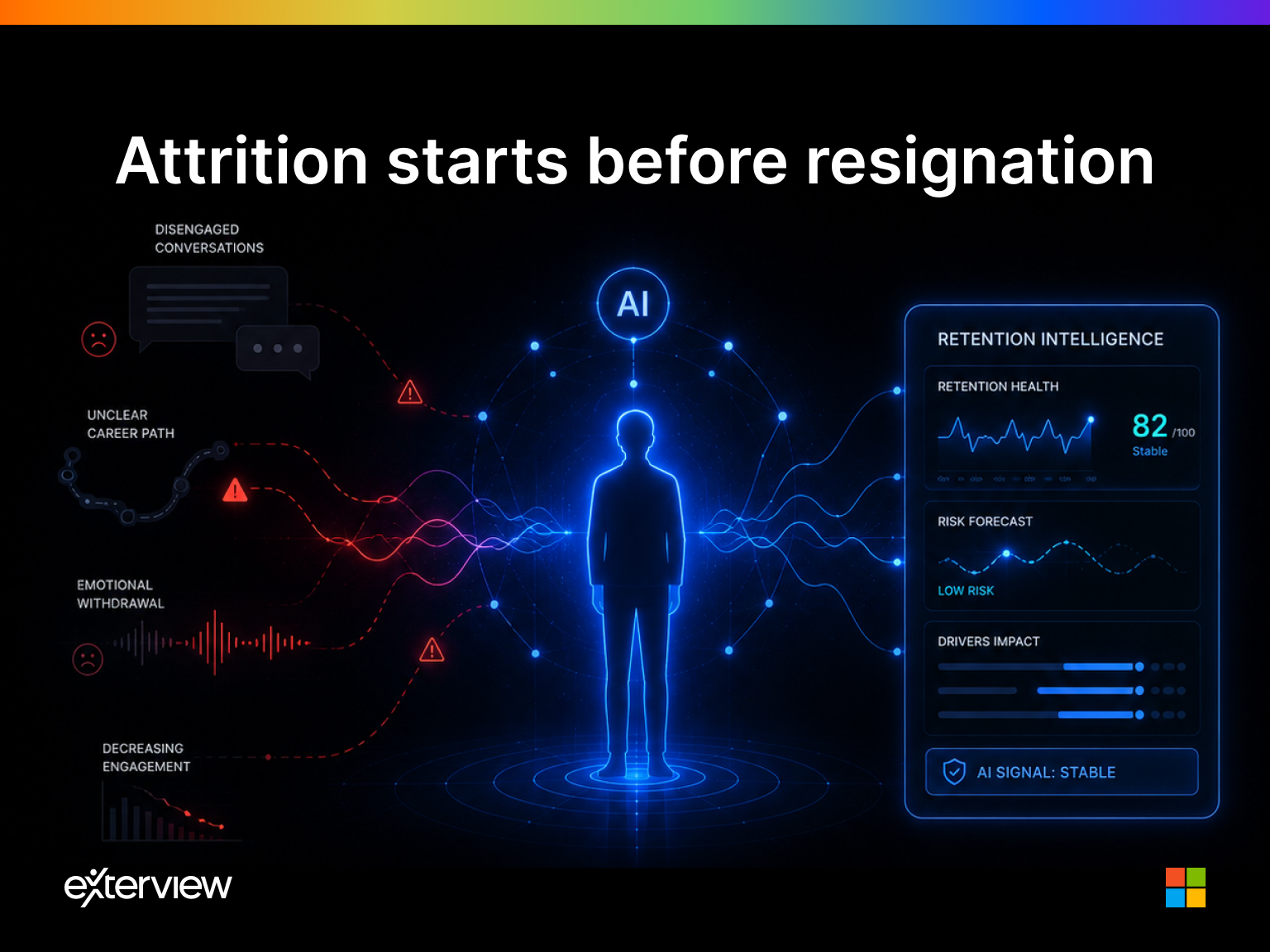
Attrition of Hidden Talent
Employees with skills that exceed their current role are among the first to leave when development opportunities do not materialize. If an organization cannot see that an employee has outgrown their role, it cannot act to retain them. Capability blind spots accelerate the attrition of your highest-potential employees.
What a Workforce Skill Graph Changes
A skill graph is a dynamic, structured representation of the capabilities that exist across your workforce not based on job titles or hire dates, but based on validated skill data collected across every professional touchpoint: hiring assessments, performance evaluations, project assignments, learning completions, and peer assessments.
When an enterprise has a working skill graph, the questions that were previously unanswerable become routine:
- Do we have the Python and machine learning proficiency to staff a new AI project without external hiring? Query the skill graph.
- Who in the organization has the deepest expertise in the legacy system we need to migrate? Query the skill graph.
- Which business units have the highest concentration of capabilities we need to scale? Query the skill graph.
- Where are the critical capability gaps that represent the highest organizational risk? Query the skill graph.
These are not hypothetical use cases. They are the questions that CHROs and business unit leaders are asked to answer in real-time during strategic planning cycles and currently cannot answer with any confidence.
How Exterview Builds the Skill Graph
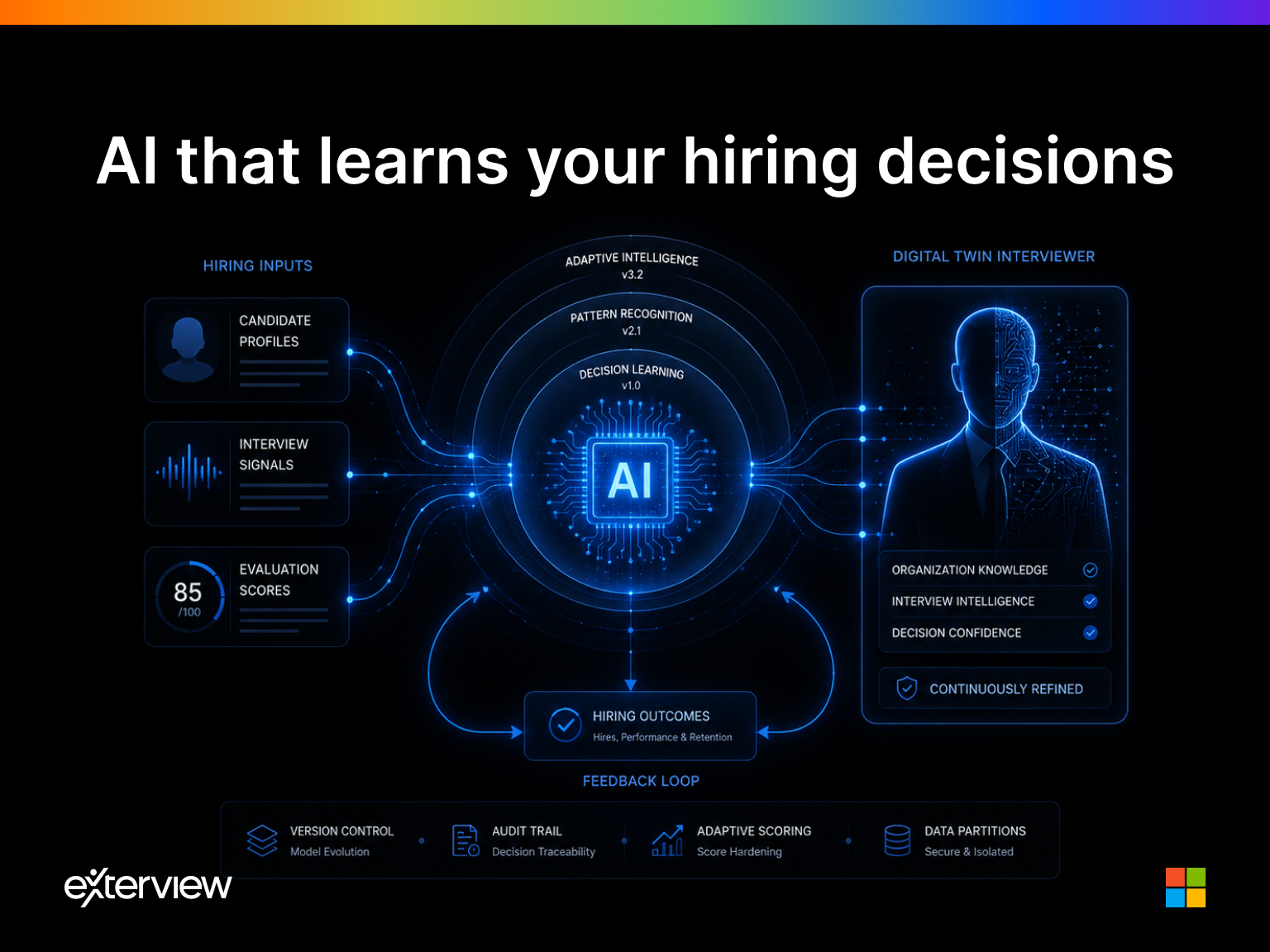
Exterview begins building structured capability data at the first moment of organizational contact: the hiring process. Every candidate evaluation generates validated skill signals against a structured competency framework. When that candidate becomes an employee, their capability profile does not disappear into an HRIS job title. It becomes the foundation of their organizational skill record.
From that foundation, Exterview's workforce intelligence layer continues to capture capability signals:
- Performance evaluations conducted against competency frameworks rather than generic rating scales
- Skill development tracking linked to role requirements and growth trajectories
- 90-day and ongoing probation intelligence that validates hiring predictions against performance reality
- Cross-role capability mapping that identifies skill adjacencies and development potential
Over time, this creates a continuously updated skill graph across the entire organization not a static snapshot, but a dynamic intelligence layer that reflects workforce capability as it actually exists today.
The Strategic Imperative
We are entering an era in which the velocity of skill obsolescence is accelerating. The capabilities that defined high performance in 2020 are being disrupted by AI tools that did not exist in 2022. The skills that will define high performance in 2027 cannot be fully specified today.
In this environment, organizations that manage workforce capability through job titles and HRIS records are flying blind. They will make hiring decisions based on lagging indicators. They will miss internal capability they already own. They will invest in development programs targeting skills their workforce already has while ignoring the gaps that actually threaten execution.
The organizations that will navigate the next decade of capability disruption successfully are the ones that can see their workforce clearly in real time, at every level, with structured intelligence rather than organizational folklore.
Exterview is building that visibility. Starting with the moment of hire.