Why Enterprises Need Agentic AI, Not Chatbots, in Hiring
Chatbots assist but do not execute while agentc AI actively runs and optimizes hiring

The global recruitment landscape is currently trapped in a "efficiency paradox." Enterprises have more tools than ever, including Applicant Tracking Systems (ATS), automated mailers, and generative AI writing assistants, yet the time-to-hire remains stagnant, and the cost of a bad hire continues to climb.
The reason is simple: most HR technology today is assistive, not executional. We have entered the era of the chatbot, but for an enterprise Talent Intelligence OS like Exterview, "chatting" is no longer enough. To truly transform talent acquisition, the shift must move from conversational interfaces to Agentic AI.
The Assistant Trap: Why Chatbots are Stalling Your Pipeline
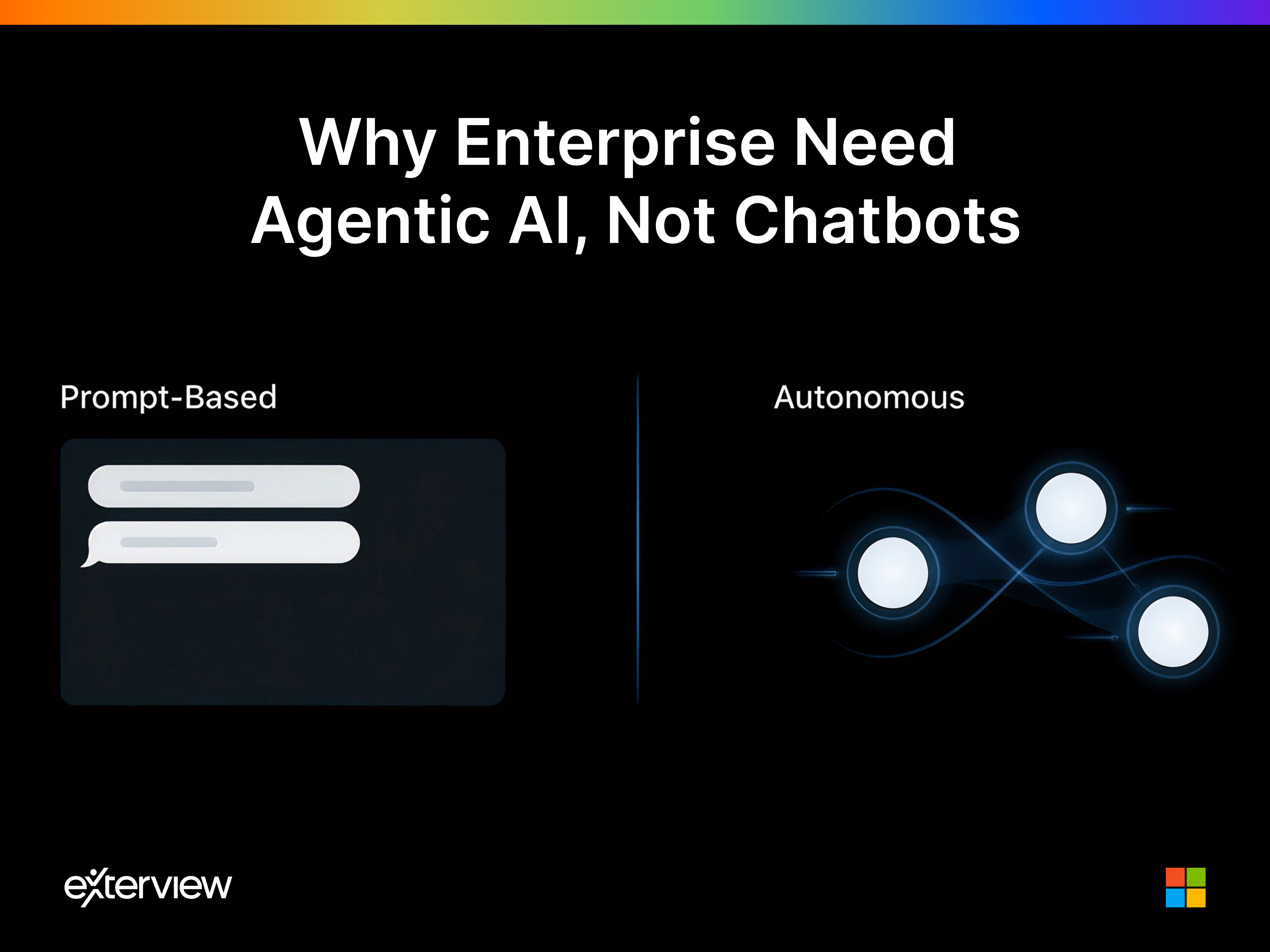
For the past two years, the focus has been on Generative AI assistants. These tools are excellent at "low-level" cognitive labor. They can rewrite a job description, summarize a lengthy resume, or draft a polite rejection email.
However, these are passive tools. A chatbot sits and waits for a human to ask a question or provide a prompt. It is a digital encyclopedia. It knows a lot, but it does nothing. In the context of a high-volume hiring cycle, a chatbot is just another tab the recruiter has to manage.
- The Problem: Chatbots require constant hand-holding.
- The Result: Recruiters spend their time "managing the AI" instead of engaging with high-potential talent.
The Agentic Shift: From "Answering" to "Executing"
The fundamental difference between a chatbot and an Agentic AI system lies in agency. While an assistant responds to a prompt, an agent works toward a goal.
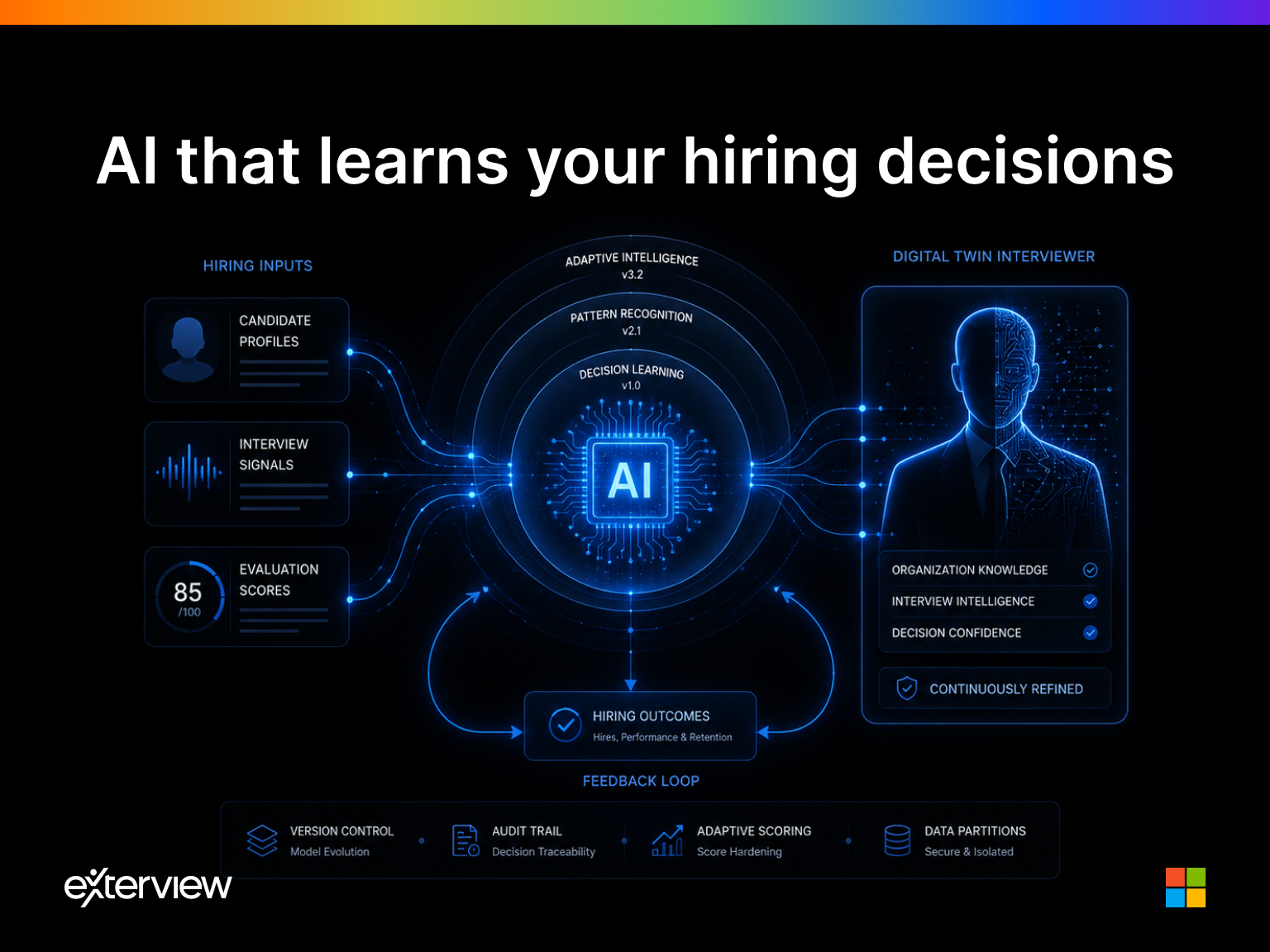
In a Talent Intelligence OS, Agentic AI doesn't just summarize a resume; it evaluates it against a complex set of competencies, cross-references it with historical hiring data, and independently decides whether the candidate should move to the next stage.
How Agents Transform the Hiring Lifecycle
When you move from a "chatbot" mindset to an "agentic" framework, the entire hiring funnel changes from a series of manual hurdles into a self-optimizing engine.
1. Screening: From Keywords to Competencies
A chatbot looks for keywords like "Python" or "Project Management." An AI agent understands the context of a candidate’s career trajectory. It can execute a preliminary screening by analyzing not just what is on the page, but the "signal" behind the experience. It doesn't just say, "This person knows Java"; it says, "This candidate’s background in microservices matches our current engineering debt, so they should move to the technical interview."
2. Running the Interview
This is where Agentic AI truly shines. While a chatbot might suggest interview questions, an agent can conduct the interview. Platforms like Exterview leverage agents to facilitate structured, unbiased technical and behavioral assessments. The agent can pivot follow-up questions based on a candidate's previous answer in real-time, ensuring a deep-dive into specific skills without human intervention.
3. Triggering the Workflow
The "Agentic" part of the name implies action. When an agent finishes an interview, it doesn't just wait for a recruiter to check the logs. It automatically:
- Generates a comprehensive candidate scorecard.
- Triggers a notification to the hiring manager.
- Schedules the next round based on calendar availability.
- Updates the ATS status.
Why Enterprises Specifically Need Agents
Small businesses can survive on chatbots because their volume is manageable. Enterprises cannot. For a Fortune 500 company receiving 100,000 applications a month, "summarizing resumes" is a drop in the bucket.
Enterprises need Talent Intelligence. Intelligence isn't just knowing who the best candidates are; it’s the ability to move them through the pipe faster than the competition. Agentic AI provides:
- Scalability: Agents don't get tired. They can screen 500 candidates at 3:00 AM with the same rigor as the first one at 9:00 AM.
- Consistency: Unlike human interviewers who might have "off days" or unconscious biases, agents follow a calibrated, data-driven rubric for every single interaction.
- Signal over Noise: Agents filter out the "noise" of inflated resumes by generating hard signals through autonomous assessments.
The Future is Autonomous
At Exterview, we believe the recruiter’s role should be that of a strategic orchestrator, not a data entry clerk. By deploying Agentic AI, enterprises reclaim thousands of hours previously lost to administrative friction.
We are moving toward a world where the AI doesn't just help you write the job description. It finds, vets, interviews, and presents you with the three best people for the job, backed by verifiable data.
The question for HR leaders is no longer, "Which chatbot should we use?" The question is, "Are our tools capable of doing the work, or are they just giving us more to read?"
The era of the chatbot is over. The era of the Hiring Agent has begun.