Why Your ATS is a Filing Cabinet, Not an Intelligence Layer
ATS systems store data but don’t generate hiring intelligence

Why Your ATS is a Filing Cabinet, Not an Intelligence Layer
Somewhere in your company’s technology stack, there is a system that has seen every candidate you’ve ever considered hiring. It has their resume, their application, their interview notes, their rejection reason. It has years of hiring decisions the good ones, bad ones, ones you wish you could revisit.
That system has never once told you anything useful about any of them.
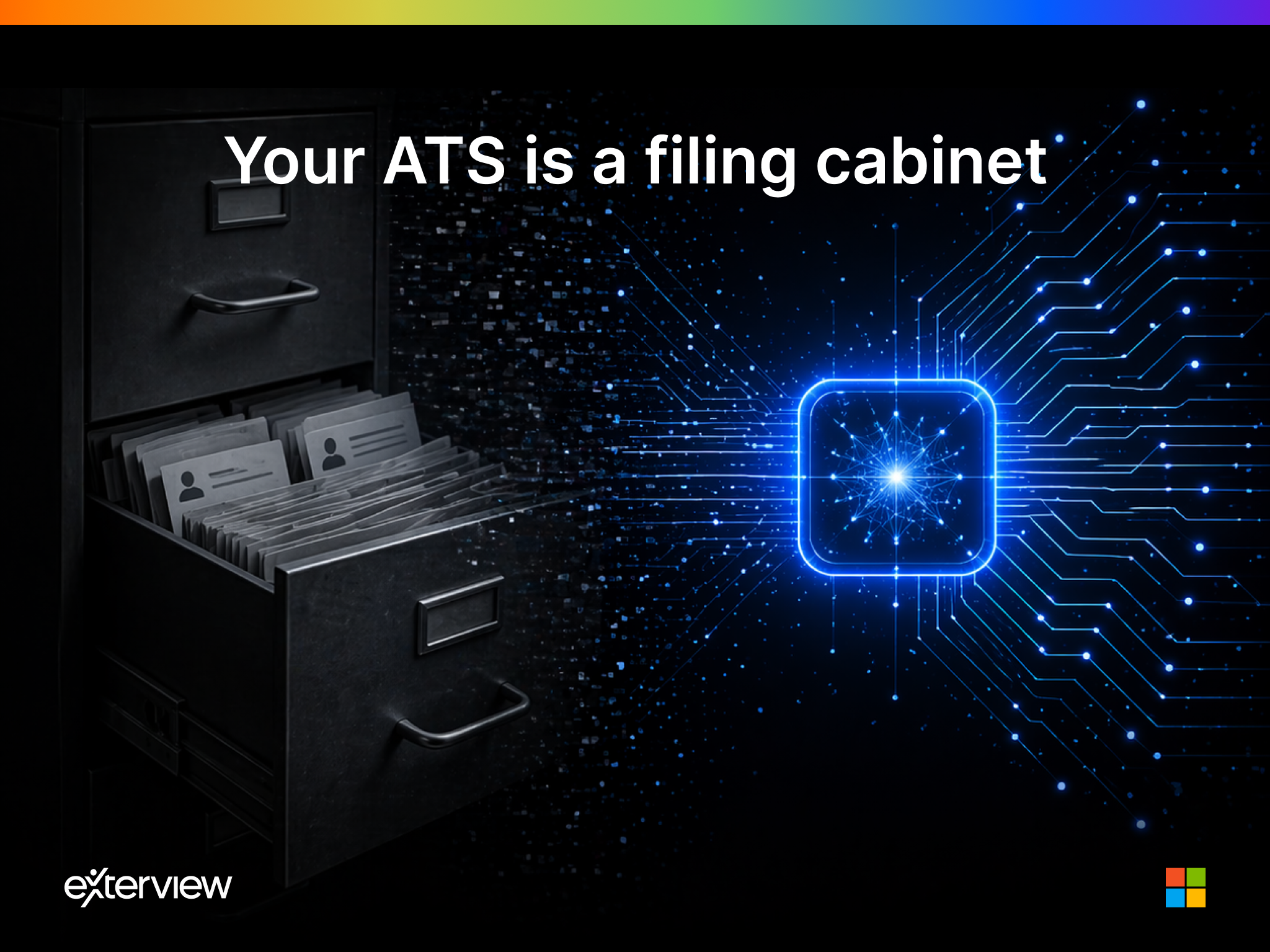
This is the Applicant Tracking System. And it is, by design, a filing cabinet. A very expensive, very sophisticated filing cabinet. But a filing cabinet nonetheless. It receives information. It routes information. It stores information. What it does not do, has never been designed to do, and cannot do with its existing architecture, is generate intelligence from that information.
That gap between the data you have and the decisions you could make with it. Is the market that Agentic Talent Intelligence is being built to fill.
The ATS Was Designed for Compliance, Not Decisions
To understand why the ATS is what it is, you need to understand why it was built.
The ATS emerged in the 1990s as a compliance and workflow tool. Its job was to ensure that hiring processes met EEOC record-keeping requirements, that candidates were tracked through defined pipeline stages, and that recruiters had a shared system of record. It was built for HR operations teams who needed to demonstrate process not for business leaders who needed to make better decisions.
That original design constraint built for auditability of process, not quality of outcome has never fundamentally changed. Workday, Greenhouse, Lever, iCIMS: each of these systems has been modernized, made more user-friendly, integrated with more tools. None of them has been rebuilt around the question that actually matters: which candidates will perform?
They are still, at their core, tracking systems. The word is right there in the name.
What a Filing Cabinet Cannot Do
Here is what your ATS knows: that a candidate applied, moved through stages, received a disposition code, and was either hired or rejected.
Here is what it does not know: why they were rejected. Whether the interview that led to rejection was well-structured or a conversation that went sideways because the interviewer was distracted. Whether the candidate who was hired for a similar role two years ago and became a top performer gave answers in their interview that resembled this candidate’s answers. Whether the rejection rate for a particular demographic group in a particular role is statistically anomalous in a way that creates legal exposure.
The ATS cannot answer these questions because it never captured the signal that would make them answerable. Interview notes are unstructured text, if they exist at all. Evaluation criteria vary by interviewer. Scoring is inconsistent. The data that was recorded was recorded for tracking, not for learning.
This is not a technology problem. It is a design philosophy problem. And it is a problem that cannot be solved by adding an AI feature to an ATS. It requires a different layer entirely.
The Intelligence Layer: What It Actually Does
An Agentic Talent Intelligence Platform is not a better ATS. It does not replace your ATS. It sits above it as the layer that generates, captures, scores, and learns from the signal that your ATS was never designed to handle.
The intelligence layer does five things that a filing cabinet cannot:
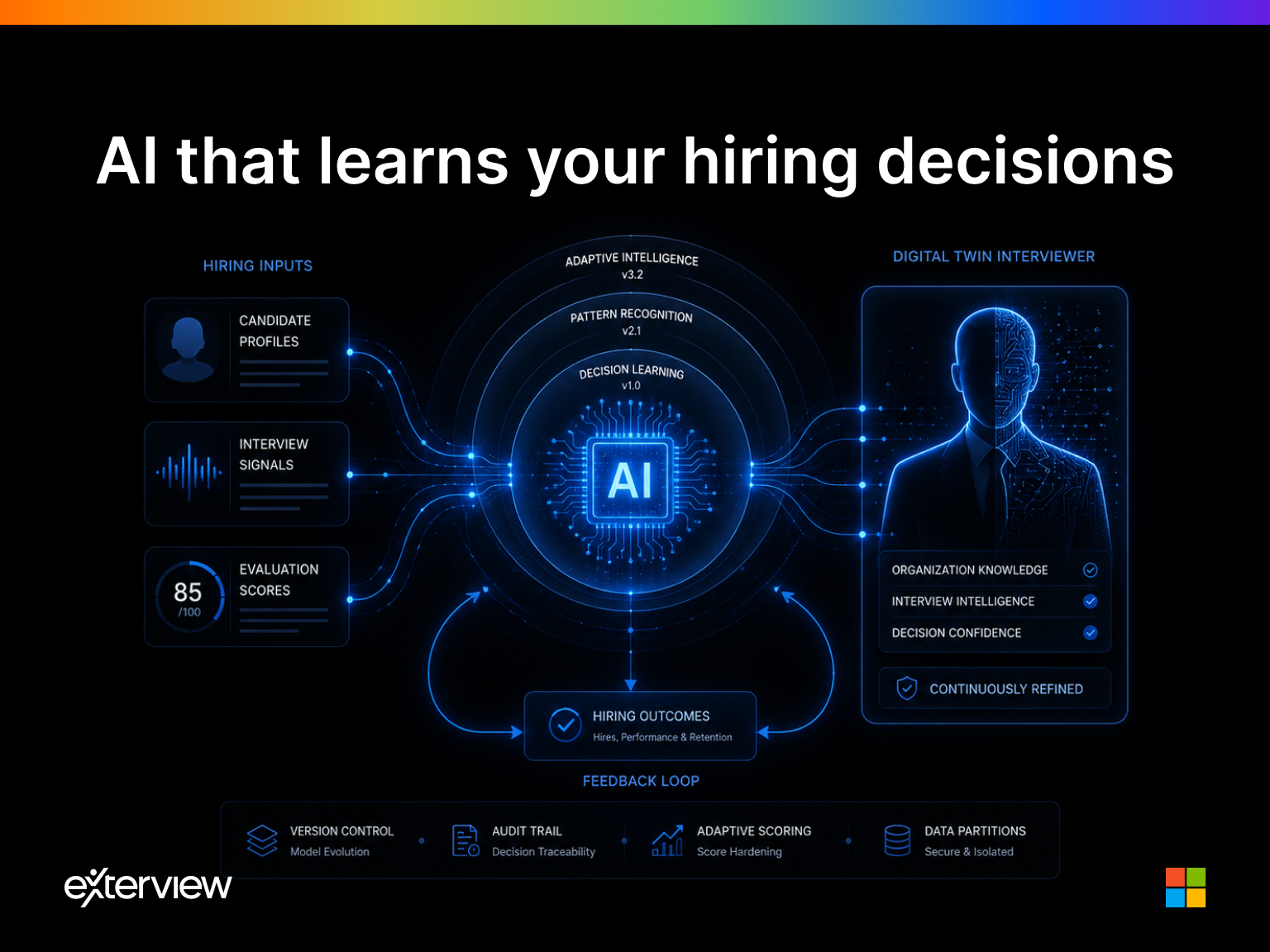
It generates structured evaluation signal. Every interview conducted through an agentic system produces a scored, structured output, competency ratings, behavioral indicators, communication analysis, consistency flags that is comparable across candidates, roles, and time.
It learns from outcomes. When a hired candidate becomes a high performer, the system can trace that outcome back to the interview signals that predicted it. Over time, the prediction model improves. The hiring system gets smarter with every decision it makes.
It detects process failure. When an evaluation deviates from expected patterns, a score distribution that suggests interviewer bias, a completion rate that suggests candidate drop-off, a signal inconsistency that suggests gaming, the system flags it. The ATS would never know.
It produces defensible decisions. Every recommendation comes with a structured rationale, specific behavioral evidence, competency scores, benchmark comparisons that can be produced in response to a legal challenge, an audit, or a candidate inquiry. Gut feel cannot be documented. Agent output can.
It compounds over time. A filing cabinet stores data linearly. An intelligence layer compounds it. Each interview makes the next prediction more accurate. Each hiring outcome validates or refines the scoring model. The asset value of the platform grows with usage in a way that no ATS has ever been able to claim.
Why ATS Vendors Cannot Build This
Every major ATS vendor has announced an AI strategy. Most of them are building copilots features that help recruiters write job descriptions, summarize resumes, or draft candidate outreach. These are useful. They are not transformative.
The reason ATS vendors cannot build the intelligence layer is architectural. Their data model was designed around workflow stages and disposition codes not around behavioral signal capture and outcome correlation. Rebuilding that data model would mean rebuilding the product. And rebuilding the product means breaking the integrations, the workflows, and the compliance frameworks that their enterprise customers depend on.
This is the classic innovator’s dilemma applied to HR tech. The incumbents are not standing still. They are running hard in a direction that cannot take them where the market is going.
The Stack Is Splitting
What is happening in enterprise talent technology mirrors what happened in sales technology a decade ago. Salesforce was the system of record. But the intelligence layer, Gong, Clari, Outreach was built on top of it, capturing signal that CRM was never designed to handle and generating insights that CRM could never produce.
The ATS is Salesforce circa 2012. The Agentic Talent Intelligence Platform is Gong. The stack is splitting, and the intelligence layer is where the value is accumulating.
Your filing cabinet will keep your files. It will not tell you which hire will change your company.
Exterview sits above the ATS as the intelligence layer, generating structured evaluation signal, learning from outcomes, and delivering auditable hiring recommendations at enterprise scale.